
India’s financial journey is shifting from basic banking to wealth creation, with Gen Z, digital investing and succession planning shaping the next phase.
As India gets closer to celebrating 80 years of independence, our national economic story is going through a massive transformation. We are no longer just focused on stabilising the economy; we are actively aiming for global leadership and a USD 7 trillion economy. This ambitious goal is being driven by something powerful: the democratisation of capital, which is bringing true financial independence to 1.4 billion people.
To really achieve this economic freedom, we have to move past simply giving people access to bank accounts. The future is about building wealth, modernising how we invest, bringing Gen Z into the fold, and making sure wealth is passed down smoothly to the next generation.
The Shift from Basic Banking to Wealth Building
India’s initial push for financial inclusion was all about getting people an identity, a bank account, and a way to make digital transactions. The Jan Dhan-Aadhaar-Mobile (JAM) initiative was a game-changer here, bringing over 54 crore people into the formal banking world and helping UPI transactions soar past Rs 20 lakh crore every month.
However, just being able to make transactions doesn’t automatically build lasting wealth. We are currently moving through three major steps in our economic evolution:
● Phase 1 – The Basics: Getting everyone set up with formal bank accounts and foundational savings tools, powered by systems like Jan Dhan and (Aadhaar Redacted).
● Phase 2 – Fast Transactions: Scaling up free, seamless digital payments (like UPI) and direct benefit transfers across both rural and urban areas.
● Phase 3 – Growing Capital: Moving beyond basic savings to help families invest in market-linked assets, like Systematic Investment Plans (SIPs), mutual funds, and corporate bonds.
To keep our GDP growing at over 7 per cent, we need to turn domestic savings into active investments. By using alternative digital data for credit scores, the financial sector is also helping informal workers and smaller businesses (MSMEs) get the loans they need, effectively turning micro-entrepreneurs into major engines of national growth. Furthermore, microfinance institutions and non-banking financial companies are stepping in to replace predatory lending, helping lower-income households avoid debt traps while bringing them into the formal economy.
How Gen Z is Redefining “Financial Freedom”
India’s Gen Z (born between 1997 and 2012) is now the fastest-growing group in the workforce, and they look at money very differently than their parents did. While older generations found security in real estate, physical gold, and fixed deposits, Gen Z is changing the rules of the game.
Thanks to micro-investing apps and low-cost brokerages, younger investors are jumping into the equity markets much earlier, making SIPs a normal monthly habit. They are heavily driven by the FIRE (Financial Independence, Retire Early) movement, prioritising personal flexibility, career mobility, and cash liquidity over staying at one job for life. However, their reliance on algorithms and social media influencers also leaves them exposed to market volatility.
A Shift in Generational Wealth Habits
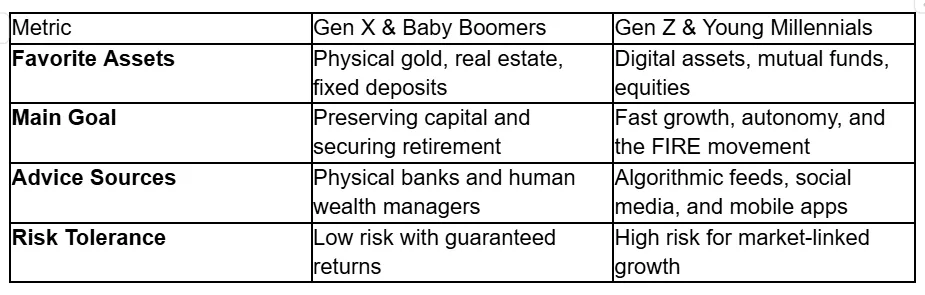
Old-school wealth management just doesn’t work for this digital-first generation. Financial institutions need to step up with hyper-personalised tools, automated risk management, and better financial education to turn Gen Z’s short-term trading habits into long-term wealth strategies.
Expanding the Markets and Passing the Torch
India’s financial markets are growing fast, and surprisingly, a huge chunk of this growth—over 40 per cent of new demat accounts—is coming from Tier-2 and Tier-3 towns, not just major cities. This surge in local, everyday investors using SIPs has created a fantastic safety net, protecting our domestic markets from the unpredictable swings of foreign investments.
However, to keep this stability, we need to offer investors more than just stocks. We must expand access to corporate debt, green bonds, and real estate investment trusts (REITs) to give people safer, balanced options.
The Upcoming Wealth Transfer
We are quickly approaching a massive financial milestone: over USD 1 trillion in private assets and family business equity will be passed down to Gen Z and millennials over the next decade. Historically, a lack of formal estate planning in India has led to messy legal disputes and fragmented assets.
To avoid this, families need modern succession planning. This means creating legal trusts, aligning global tax strategies, and finding a middle ground between the traditional views of older founders and the tech-forward, ESG-focused mindsets of their Gen Z heirs. We also need clear rules for passing down digital assets and intellectual property.
The Roadmap to 2027
To make sure our economic growth remains strong and inclusive as we approach 80 years of independence in 2027, the financial sector must focus on three main things:
1. Better Rural Credit: We need to move beyond just holding rural deposits and start offering collateral-free loans based on cash flow to informal businesses and farmers.
2. Stronger Cyber Protection: With millions using digital payments, we must use AI to detect fraud and set up solid consumer protection funds to keep institutional trust high.
3. Maturing the Markets: We need to strengthen domestic insurance and pension pools to ensure long-term stability and educate young investors so they don’t panic during market downturns.
Ultimately, India’s success won’t just be measured by stock market highs or GDP numbers. True independence will be reached when every citizen—from a rural street vendor to a big-city Gen Z entrepreneur—has the tools and knowledge to completely control their financial future.